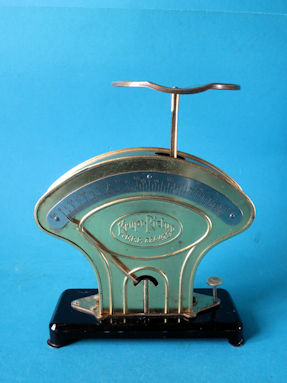
KRUPS-RICTUS
letter scale

probable maker: Philipp Jakob Maul, Hamburg, Germany
bruine lijn
letter scale, probable maker Ph.J. Maul
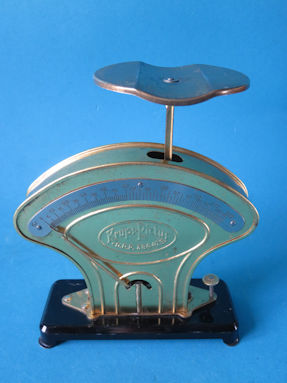
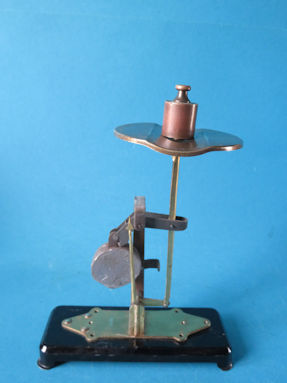
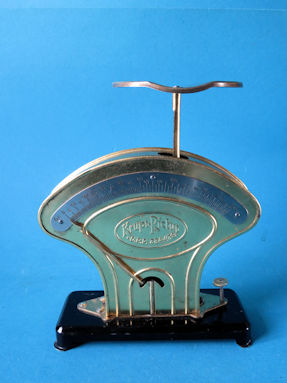
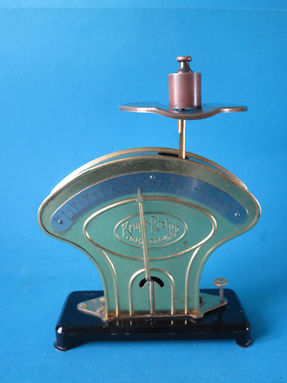
Krups-Rictus letter scale
 

This letter scale advertises KRUPS. KRUPS began as a small forge in Solingen, Germany. In 1846, Robert KRUPS Jr. took over the family business and began producing precision scales. The company achieved international success.
The letter scale is likely a Rictus by Philipp Jakob Maul of Hamburg, Germany. The Rictus model was also later made by Jakob Maul of Zell. The maker of this Krups scale is unknown, as a Maul logo is missing.
Earlier, the FAAM advertising version of a Rictus was shown, with the advertising slogan for the candy brand on the back of the scale house: FIJN FAAM FANTASTISCH. There's also a Rictus advertisement by ROBERT KLOESER, the seller of Faam products in Germany. Other Rictus scales are shown on this website also, see Rictus with brass saucer, jubilee Rictus, Jakob Maul Rictus and also the black Rictus.
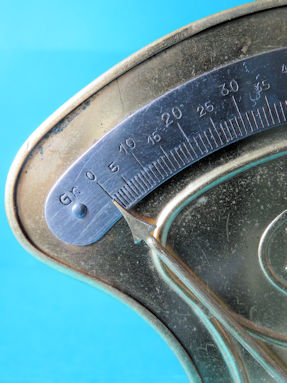
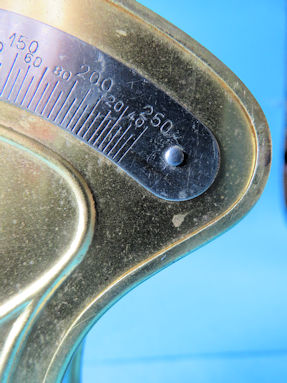
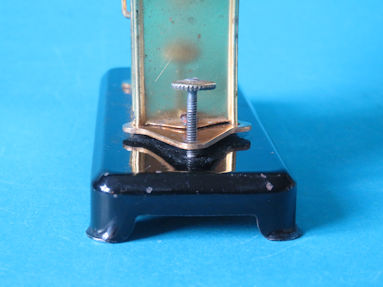
Rictus scales are available with a flat, round letter plate, a round letter plate with a central lowered part for rollers, a brass saucer, a rectangular plate, an aluminum plate holder plus a separate aluminum saucer, and as an egg scale with an egg cup. The Rictus has an unsightly zero adjustment: the housing containing the weighing mechanism is mounted on a small base plate. This plate is secured on one side to the second, larger base plate with three dowel-head rivets. The zero adjustment screw is located on the other side. This ensures that the housing always has a jarring misalignment with the large base plate. The weighing range of the scale shown here is 250 grams. Up to 50 grams, the scale is graduated per gram. Above 50 grams, there is a graduation every 5 grams. There are Rictus egg scale models with weighing ranges of 60 grams, 75 grams, and 100 grams. And as a letter scale or as a household scale with weighing ranges of 250 grams, 500 grams and 1000 grams.
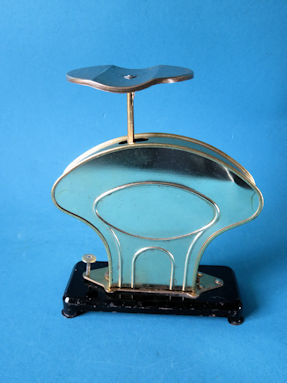
 

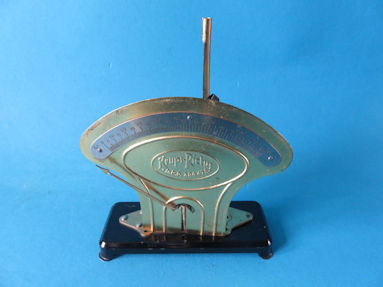
back of the scale
back of the letter scale
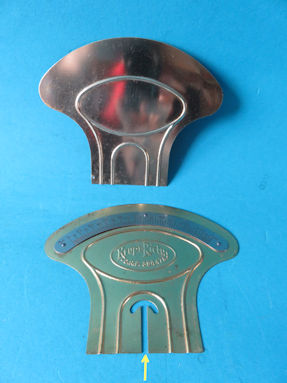
 

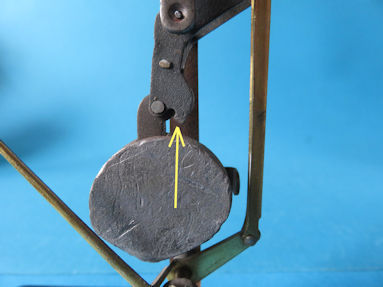
There are minor detail differences. There may or may not be a hole in the front and back plates to block the weighing mechanism during transport. The Krups-Rictus has a slot at the bottom of the front plate to facilitate mounting along the dial. Other models do not.
There are other Rictus scales with advertising on them. The following are known to me:
- DE FAAM BREDA (punched inwards) with on the back: FIJN FAAM FANTASTISCH (punched inwards);
- RADIO SABA RADIO a blue scale with a gold-coloured, decorative sticker stuck on;
- ROBERT KLOESER IMPORT EXPORT AACHEN (punched inwards) with on the back: FAAM DIE ROLLE FÜR ANSPRUCHSVOLLE (punched inwards);
- EMIL BOHLIN - GEFLE (punched outwards), Emil Bohlin was a large coffee roasting company in Sweden;
- ENZIAN a blue scale with (punched inwards) the name Enzian and a stylised alpine flower, Enzian was a German soap factory;
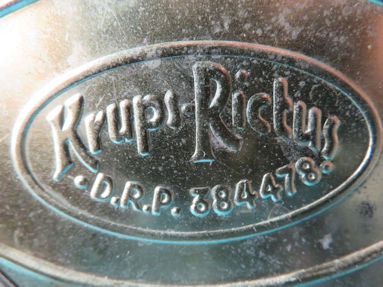
- KRUPS-RICTUS (punched outwards) and underneath that again D.R.P. 384478, this also on a brass egg scale version;
- 1881 A.S. 1931 on a separately attached elliptical plate, it is a scale made in connection with a 50th anniversary.
There are probably more versions with advertising.
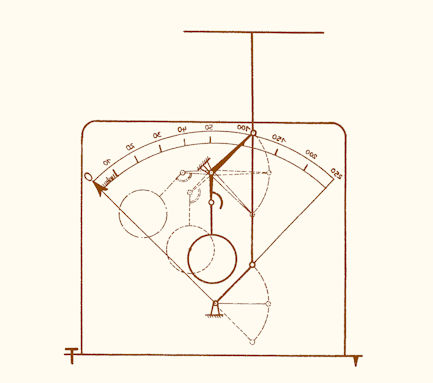
The German patent D.R.P. 384478 is stamped on the front of Philipp Jakob Maul's RICTUS and also on Jakob Maul's RICTUS. It is described in the Deutsches Reich Patentschrift with DRP number 384478, with the title Neigungswaage. It is registered in the names of Deutsche Werke Aktien-Gesellschaft in Berlin, Ernst Prüfer in Berlin-Steglitz, and Dipl.-Ing. Ernst Wulf in Berlin-Friedenau. It was patented on August 17, 1921. The patent was published on November 19, 1923. The patent drawing is schematic. The scale mechanism is mirrored: the reading needle and scale move from right to left. The reading movement realized on the scale is more logical, namely the reverse; see also the drawings at the bottom of this page. The actual housing is more elegant than the housing in the drawing.
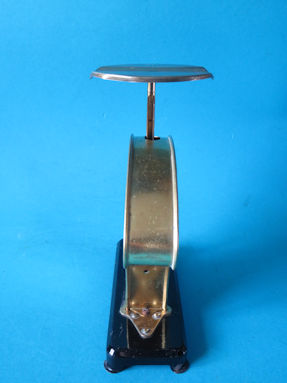
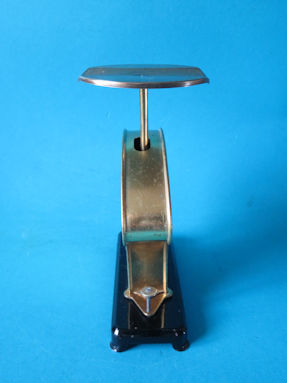
Below are some more images of the Krups-Rictus letter scale up to 250 grams.

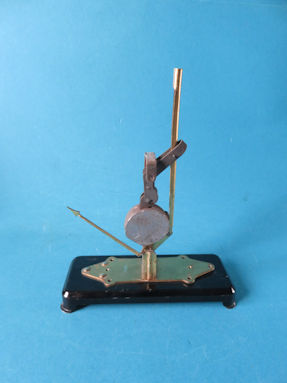
side view
side view
 
 
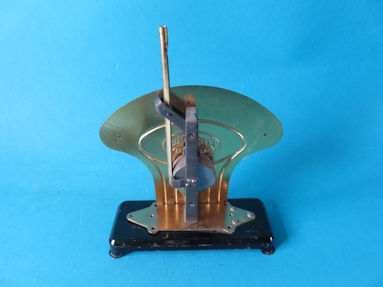
front view
front view
 
 
side view
side view
 
 
detail 1
up to 50 grams stripes per gram
 
detail 2
Krups-Rictus D.R.P. 384478
 
detail 3
from 50 to 250 grams, stripes per 5 grams
 
detail 4
the zero adjustment screw pushes against the black base
 
detail 5
the zero adjustment screw tilts the scale housing
 
detail 6
the bottom of the scale base
 
two positions of the mechanism
animation:
the mechanism from 50 to 250 grams
[move the pointer over the photo]
positions of the counterweight
animation: the counterweight hangs down freely up to 50 grams;
it is then taken along in the rotating movement of the scale.
the yellow arrows indicate the take-away surface
[move the pointer over the photo]
two positions of the mechanism
animation:
the mechanism without and with the letter plate
[move the pointer over the photo]
detail 7
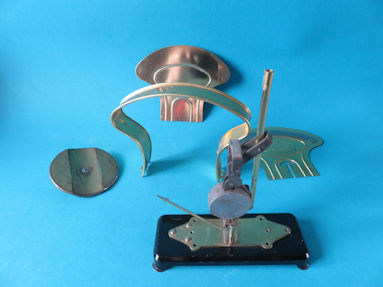
the disassembled parts (without the zero adjustment screw)
 
detail 8
the yellow arrow points to the slot (see text)
 
detail 9
the mechanism behind the front plate
 
load the scale with 100 grams
animation:
place 100 grams on the scale
[move the pointer over the photo]
 
two positions of the scale
animation:
from 100 to 250 grams
[move the pointer over the photo]
 
detail 10
the mechanism behind the front plate
 
 
the patent figure
the patent figure of D.R.P. 384478
with a pointer going from right to left
 
pointer moves from left to right
Rictus animation:
the pointer moves from left to right
[move the pointer over the photo]
 
the mirrored patent figure of D.R.P. 384478
the pointer goes from left to right, according to the Rictus
 
bruine lijn
« collection part 29 «© copyright André Solversion: January 16, 2026